
Key Takeaways
- About one in four older adults falls each year, and many of these falls are preventable.
- Bathrooms, stairs, poor lighting and loose rugs are the most common hazards in the home.
- Strength and balance exercise, regular eye checks and medication reviews significantly lower fall risk.
- Care options in Noida range from an elderly day care centre in Noida to full residential support, so choose based on real need.
- Always visit a facility in person and ask for a written care plan before making a decision.
Most families can recall the moment they first realized a parent was no longer as steady on their feet. A phone call comes in, a mother has slipped in the bathroom, and suddenly the household’s routine has to change. After fifteen years of writing about caregiving and senior wellness, I have heard this story in many versions. The encouraging part is that most falls follow predictable patterns, and many of them can be prevented. This guide walks through practical home safety steps, the health habits that protect balance, and the care options available in Noida when living alone is no longer safe. Whether you are checking on a parent from another city or looking after a relative at home, the goal is the same: keep the person steady, confident and independent for as long as possible.
Why Falls Deserve More Attention Than They Get
About one in four adults aged 65 and older falls each year, according to the U.S. Centers for Disease Control and Prevention, and falls remain a leading cause of injury among older people. A fall that looks minor at first can cause a fractured hip, a head injury, or weeks of bed rest. Bed rest weakens muscles and shrinks confidence. Many seniors start avoiding movement after a fall, which makes the next fall more likely. Breaking that cycle is the real goal of prevention. It protects not only the body but also the person’s willingness to move, socialise and take part in everyday life.
The Gap Most Families Overlook
Most fall-prevention advice is written for hospitals, and most home-safety checklists stop at “remove the rugs.” Families are left to work out the rest themselves. They rarely know how to spot hidden hazards, how a new medicine might affect balance, or when a parent needs supervision rather than occasional help. Many families in Noida also juggle long working hours, and finding structured daytime support that fits a busy schedule can feel nearly impossible. Closing the gap between general advice and daily reality is where good planning succeeds or fails.
Q: What causes most falls in older adults at home?
A: Slippery bathroom floors, loose rugs, poor lighting and cluttered walkways are the most frequent causes. Nighttime bathroom trips are a particularly common setting.
Essential Home Safety Tips for Seniors
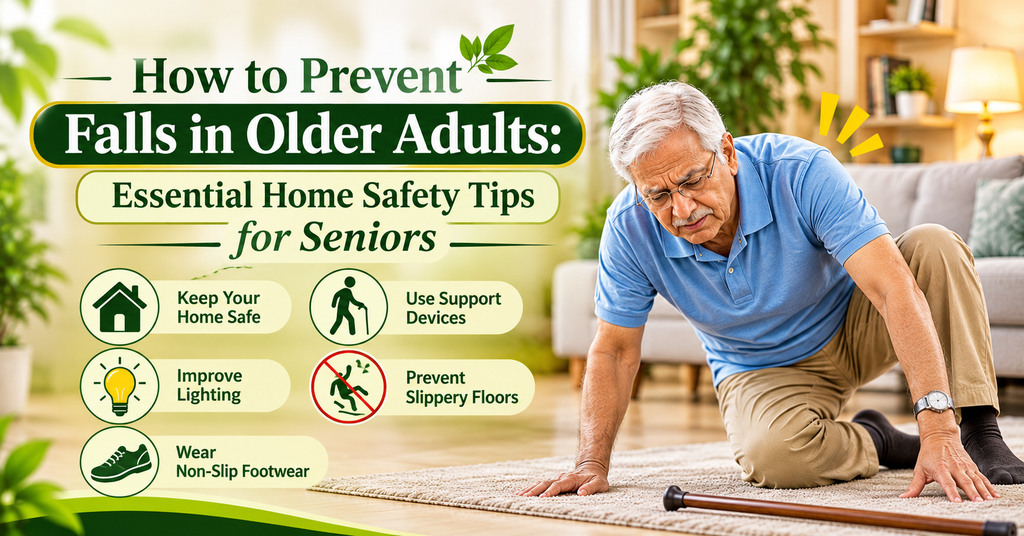
Walk through the home with one question in mind: what could make this person slip, trip or lose balance here? The answer changes from room to room, so start with the places where falls most often happen.
Start in the Bathroom
The bathroom is usually the most dangerous room in the house. Wet tiles, slippery tubs and low toilets combine into serious risk. Install grab bars beside the toilet and inside the shower, and make sure they are fixed firmly into the wall. Towel racks cannot bear body weight and can give way under pressure, so never use them for support. Place a non-slip mat inside the tub and a textured mat outside it. A sturdy shower chair and a handheld showerhead allow bathing while seated, which removes the need to balance on one leg. A night light makes midnight bathroom trips much safer.
Q: Are grab bars really necessary?
A: Yes. They offer stable support exactly where balance is most often lost, and installation costs far less than treating a single fracture.
Clear the Path
Loose rugs, electric cords, stacked newspapers and furniture crowding narrow walkways cause a surprising share of falls. Walk through the home as if seeing it for the first time, and remove anything that could catch a foot. Secure rugs with non-slip backing or remove them if they curl at the edges. Tuck cables along the wall. Keep frequently used items such as kettles, medicines and water bottles between knee and shoulder height, so there is no need to stretch, bend or climb on a stool.
Light the Way
Poor lighting is an overlooked hazard. Older eyes need more light to see clearly and adjust slowly between bright and dim rooms. Place bright, even lighting in hallways, stairwells and bedrooms. Motion-sensor night lights between the bedroom and bathroom are inexpensive and effective, since many falls happen at night. Switches should be reachable from the bed, so the person never has to walk into a dark room to find the light.
Q: Should an older adult sleep with a light on?
A: A soft night light is ideal. It allows safe movement without the glare of a full overhead light disturbing sleep.
Make Stairs Safer
Install handrails on both sides of the staircase where possible, and extend them slightly beyond the top and bottom steps. Mark the edge of each step with contrasting tape so it stands out clearly. Keep the stairs free of shoes, bags and laundry baskets. If climbing has become difficult, arrange daily life so the bedroom, bathroom and kitchen sit on the same level.
Choose Footwear Carefully
Backless slippers, socks on smooth floors and shoes with thin, slick soles are common culprits. Choose closed-back shoes with firm, non-slip soles and a snug fit, because loose shoes can slide under the foot as easily as slippers. Discourage walking barefoot on hard floors.
Q: Is it safe for seniors to walk barefoot?
A: It is best avoided on hard floors, since bare feet offer little grip and no protection from sharp objects.
Prepare the Bedroom
Keep a clear path from the bed to the bathroom, with nothing on the floor along the way. Place a sturdy chair near the bed so the person can sit while putting on shoes and socks. Keep a phone or emergency alert device within reach while lying down, because a call for help is useless if the phone is across the room.
Health Habits That Protect Balance
Home modifications work best alongside personal health habits. Regular strength and balance exercise is among the most effective fall-prevention strategies available. Tai chi, gentle yoga, seated strength training and daily walking improve leg strength, posture and coordination. A physiotherapist can design a routine suited to the individual’s condition, which is much safer than starting an intense program alone. (CDC)
Q: Does exercise really reduce fall risk?
A: Yes. Balance and strength training are among the most evidence-supported fall-prevention measures, especially when started under professional guidance.
Vision needs regular attention too. Outdated glasses, cataracts and untreated eye conditions distort depth perception and make steps harder to judge. An annual eye examination is a simple way to reduce risk.
Medication review matters just as much. Some prescriptions, including certain sedatives, blood pressure medicines and sleep aids, can cause dizziness or drowsiness. Ask the doctor or pharmacist to review everything the person takes, including over-the-counter products and supplements, at least once a year. Encourage the person to sit on the edge of the bed for a minute before standing, since rising too quickly can cause dizziness.
Q: How often should medications be reviewed?
A: At least once a year, and again whenever a new prescription is added or a fall occurs.
Bone and muscle health help the body cope with a fall. Adequate calcium, vitamin D, protein and hydration all support stronger bones and muscles. A doctor can advise whether supplements are appropriate, because needs vary from person to person.
When Home Safety Is Not Enough
Even a well-prepared home cannot always replace hands-on help. Some seniors live with memory conditions that make hazards hard to recognise. Others need help with bathing, medication timing or walking, and family members living far away cannot be present every day. If a parent has fallen more than once, or caregivers are exhausted, professional support may be the right step. This decision reflects good care rather than failure, and it often brings both the senior and the family real peace of mind.
Q: How do I know if my parent needs professional care?
A: Warning signs include repeated falls, difficulty with bathing or dressing, confusion about medications and exhaustion among family caregivers. A doctor’s assessment gives the clearest picture.
Care Options for Seniors in Noida
Families in Noida have several paths, and the right one depends on the person’s independence level, health needs and daily routine. Be clear about the support required before visiting any facility.
If your parent is mostly independent but needs daytime supervision, an elderly day care centre in Noida offers structured activities, supervised meals, light exercise and social engagement during working hours. The person returns home each evening to their own bed and routine, which many seniors value greatly.
For seniors who need round-the-clock assistance, a senior citizen care home in Noida provides a safe, supervised living environment with trained staff, medication support and emergency response at any hour. When comparing options, ask for a written care plan and a clear explanation of what daily support includes.
Residential care for elderly in Noida suits people who can no longer manage alone and benefit from a dedicated community setting. Compare the staff-to-resident ratio, fall-prevention measures and medical tie-ups before deciding. Families who want long-term companionship often explore an old age home in Noida, while those looking for broader support, such as home visits or nursing help, can start with elder care services in Noida to see which model fits.
Q: What is the difference between a day care centre and a senior citizen care home?
A: A day care centre supports seniors during daytime hours, and they return home in the evening. A senior citizen care home provides accommodation and care around the clock.
Why Families Choose Us
Choosing a care provider is an emotional decision, and families are right to look beyond a brochure. Our approach centres on what matters in everyday life. Rooms and common areas are designed with fall prevention in mind, with grab bars, non-slip flooring, adequate lighting and clear walkways. Each resident follows an individual care plan, and mobility and medication needs are reviewed regularly. Residents enjoy nutritious, home-style meals, supervised exercise and activities that keep the mind engaged.
Comfort matters just as much. Rooms feel warm and personal, with space for familiar belongings and family photographs. Older adults deserve dignity and privacy as well as safety, and that principle guides every decision we make. Families receive regular updates, so nobody has to wonder how their loved one is doing. Whether you need a residential care for elderly in Noida or a broader range of support, our elder care services in Noida are designed to support both residents and their families.
Q: What should I check during a facility visit?
A: Look at cleanliness, safety features, staff attitude, meal quality and emergency procedures. Ask how care plans are updated and reviewed.
See Our Facility Before You Decide
FAQ’s
1. What is the first step in making a home safer for a senior?
Walk through the bathroom, stairs and bedroom first, since these rooms see the most falls. Note every rug, cord and dim corner, and fix the most serious hazards before anything else.
2. Are fall-prevention changes expensive?
Many of the most useful changes, such as night lights, non-slip mats and clearing clutter, cost very little. Grab bars and handrails cost more but are a one-time investment that can prevent serious injury.
3. When should a family consider a senior citizen care home?
Consider it when the person needs help around the clock, has frequent falls, or when family caregivers can no longer provide safe supervision. A visit and a written care assessment will clarify the right level of support.
4. How should a family act after a fall?
Seek medical attention promptly, especially if there is a head injury, confusion, severe pain or inability to bear weight. Afterwards, review what caused the fall and update the care plan so it does not happen again.
Final Thoughts
Falls rarely have a single cause, and they do not have to be accepted as an inevitable part of ageing. A safer home, a stronger body and the right support when it is needed allow most seniors to live with dignity and confidence. If you are exploring options for a loved one in Noida, whether a senior citizen care home in Noida or an elderly day care centre in Noida, reach out to our team for a personal consultation and a tour of our facility.


One Response