
Key Takeaways
- Healthy ageing is about maintaining the ability to do what matters to a person, not only about avoiding illness.
- Nutrient-rich, varied meals matter more with age, even when appetite is lower.
- Thirst weakens with age, so offer fluids regularly through the day.
- Regular activity with a strong focus on balance and strength helps prevent falls.
- Consistent sleep, daylight, social contact and a steady routine support wellbeing.
- Changes in appetite, sleep, mood, confusion or mobility deserve a medical check.
- Individual needs vary, so consult a doctor or registered dietitian before making major dietary changes.
Many families notice the change gradually. A parent who used to enjoy cooking skips meals, drinks less water than before, or seems more tired in the afternoons. These shifts are common, but they are not always simply “part of getting older.” Small, consistent habits around food, fluids, movement and rest can make a real difference to how comfortably an older person manages each day.
This guide explains what healthy ageing means, why nutrition matters so much in later life, and how to build practical routines that suit each person. It also covers when to involve a doctor or dietitian, and how professional support can help when families are stretched thin.
What Healthy Ageing Means for Older Adults
Healthy ageing does not mean being free of all illness. The World Health Organization (WHO) describes it as the process of developing and maintaining the functional ability that enables wellbeing in older age. Functional ability covers things like meeting basic needs, staying mobile, making decisions and keeping relationships going. who
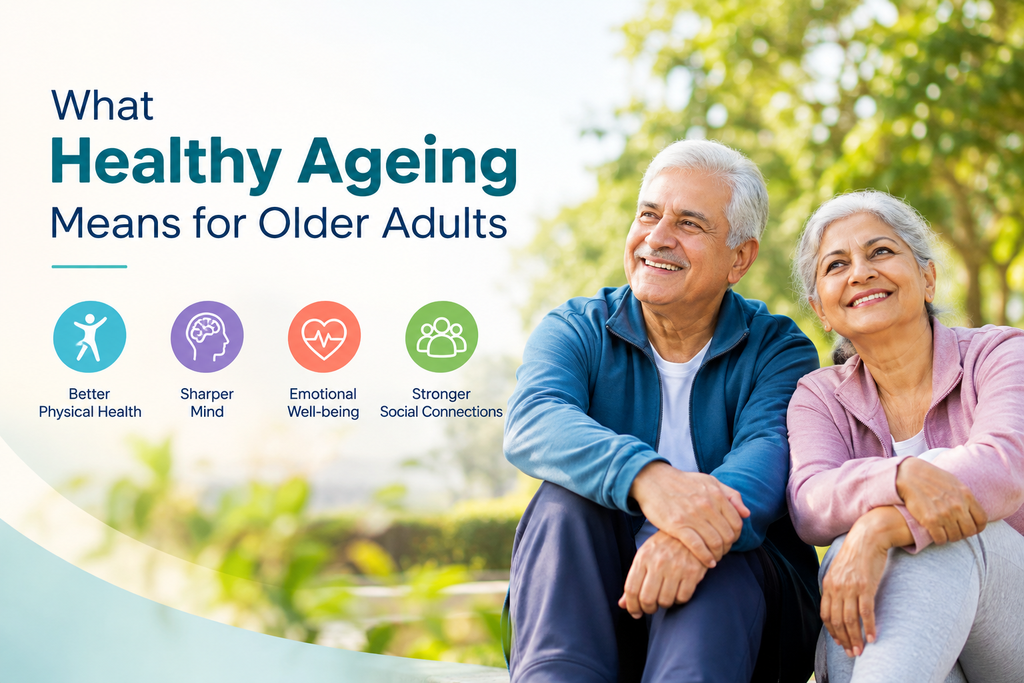
This matters because many older adults live with one or more long-term conditions that are well managed and have little effect on their day-to-day wellbeing. The goal is to support what someone can do, enjoy and contribute, not to measure ageing only by test results or diagnoses.
Why Nutrition for Elderly People Matters More in Later Life
The importance of nutrition in old age is easy to underestimate. Older adults often need fewer calories than they did at 30, but their need for certain nutrients stays high. Protein, fibre, vitamins and minerals all play a role in keeping muscles strong, digestion regular and energy steady. Good nutrition for elderly people is less about eating more and more about eating well.
Several age-related changes make eating well harder:
- Appetite may drop. Meals can feel less appealing, especially when eating alone.
- Taste and smell may change. Food can seem bland, which sometimes leads to heavier use of salt or sugar.
- Teeth and gums may cause problems. Chewing hard foods such as raw vegetables or tough meat can become uncomfortable. The NIA notes that eating softer foods can help when dental problems make chewing difficult. vnatexas
- Digestion can slow down. Constipation is common, and fibre and fluids help.
- Medicines can affect appetite or absorption. Some medicines change how hungry someone feels or how the body uses nutrients.
Because of these factors, a person may eat less without any obvious cause, and the food they do eat may not provide everything their body needs. Noticing these patterns early helps families respond before problems build up.
Common Nutritional Needs of Older Adults
The nutritional needs of older adults differ from those of younger adults, even when the overall eating pattern looks similar. Older adults generally need nutrient-dense foods, meaning foods that provide a lot of vitamins, minerals, protein and fibre without excess sugar, salt or unhealthy fats. Small portions of these foods can provide a lot of nourishment, which is important when appetite is reduced.
Hydration is part of these needs too, and it is covered in more detail later in this guide.
Essential Nutrients and Food Groups
The NIA’s guidance on food groups is a useful starting point. It recommends choosing a variety of nutrient-dense foods from vegetables, fruits, grains, protein foods, dairy and healthy oils. Healthy eating is a cornerstone of healthy aging, and no single food group does the job alone. nih
Protein for Strength and Recovery
Protein helps maintain muscle, which supports balance and independence. Good sources include eggs, fish, poultry, pulses such as lentils and beans, tofu, paneer, milk and yoghurt. Many older adults benefit from including a source of protein at each meal, though the right amount depends on health, activity level and medical advice.
Fibre for Digestion
Fibre helps regular bowel movements and supports heart and blood sugar health. Whole grains like oats, brown rice and whole wheat chapatis, along with vegetables, fruits, lentils and beans, are good sources. Increase fibre gradually and alongside fluids, otherwise it can cause bloating.
Calcium and Vitamin D for Bones
Bones become more fragile with age, so calcium and vitamin D are important. Milk, yoghurt, paneer, fortified foods, leafy greens and some fish provide calcium, while sunlight, fortified foods and certain fish provide vitamin D. Because the right intake varies by person, and supplements can interact with medicines, it is best to ask a doctor before starting any supplement.
Fats, Salt and Sugar
Healthy fats from nuts, seeds, olive oil and fish support heart health. Salt and added sugar are worth moderating, particularly where blood pressure or blood sugar are concerns. Reading food labels helps families compare options, as the NIA encourages people to read the Nutrition Facts label to check for sodium and added sugars. vnatexas
Building a Healthy Diet for Senior Citizens
A healthy diet for senior citizens does not require complicated recipes. A simple way to build a plate is to fill half of it with vegetables or fruit, a quarter with a protein food, and a quarter with a whole grain or starchy food, then add a serving of dairy or a fortified alternative where it fits. This pattern works well for many Indian home meals, such as dal with brown rice, vegetable sabzi with roti, or curd with a vegetable upma.
Some practical habits support healthy eating habits for seniors:
- Plan meals in advance. Planning reduces the number of skipped meals and makes shopping easier. The NIA points out that meal planning takes the guesswork out of eating and helps ensure variety. nih
- Keep healthy snacks visible. Fruit, roasted chana, nuts, yoghurt or boiled eggs are easy options. Snacks can help when someone eats small meals.
- Adjust texture, not nutrition. Soft-cooked vegetables, dal blended smooth, khichdi, or mashed fruit keep nutrients intact for people with chewing difficulties.
- Make meals social where possible. Eating with family or friends often increases appetite and enjoyment.
- Keep food safety in mind. The NIA notes that some foods carry higher risks for older people, such as unpasteurized dairy foods, so it is worth checking labels and storage habits. vnatexas
Dietary needs vary. A person with diabetes, kidney disease, a swallowing difficulty, a food allergy or a prescription that affects appetite may need a different approach. In those cases, a doctor or registered dietitian should guide any changes, especially restrictive diets.
The Importance of Hydration in Old Age
Hydration is one of the most overlooked parts of healthy ageing. The NIA advises older adults to drink water often, because with age a person may lose some of your sense of thirst. Milk, low-fat milk and unsweetened drinks also count, while sugary or very salty drinks are best limited. vnatexasvnatexas

Older adults can become dehydrated for several reasons: a weaker thirst response, changes in how the kidneys hold on to water, illness, heat, certain medicines, and limited access to drinks. An NHS leaflet for older adults notes that dehydration can cause feeling tired or confused and can also lead to infections such as urinary tract infections. cntw
Warning signs to watch for include:
- Dark urine or passing less urine than usual
- Dry mouth or dry skin
- Dizziness, especially when standing up
- Tiredness, headache or new confusion
Confusion or sudden unsteadiness should always be checked by a doctor, as they can have several causes.
Practical ways to help:
- Offer a glass of water with each medicine and meal, and keep a water bottle within reach.
- Set regular times for drinks, such as on waking, mid-morning, after lunch, mid-afternoon and in the evening, rather than waiting for thirst.
- Include soups, dal, curd, fruit and milk-based drinks, which add fluid.
- During hot weather or illness, check in more often. Ask a doctor before using electrolyte drinks for a particular condition.
- Be mindful of fluid limits if a doctor has recommended them for heart or kidney reasons.
Building a Healthy Daily Routine for Elderly People
A predictable routine supports digestion, sleep, medicines, activity and social contact. A good daily routine for elderly people is one that fits the person’s own rhythm. The example below is illustrative only. Every person’s needs, energy levels and medical advice will differ.
Sample daily rhythm (illustrative)
- Morning: Wake at a regular time, drink a glass of water, take morning medicines as prescribed, and eat a light breakfast with protein and fibre.
- Late morning: A short walk, gentle stretching, or a seated exercise routine. Drink water.
- Lunch: The main meal of the day, with vegetables, protein and a whole grain. A short rest afterwards.
- Afternoon: Light activity, a hobby, or a visit from a friend or family member. Keep any nap brief.
- Evening: A light, early dinner, a calm wind-down, and medicines as prescribed. Limit caffeine and avoid large meals close to bedtime.
- Bedtime: Go to bed at a consistent time in a dark, quiet, comfortable room.
Routines work best when they feel flexible rather than rigid. Making small changes, such as a short evening walk in place of a long one, is usually more sustainable than a strict timetable.
Safe Physical Activity, Mobility and Balance
Movement is one of the strongest supports for healthy ageing. WHO recommends that older adults do at least 150 minutes of moderate-intensity aerobic physical activity throughout the week, or an equivalent mix of moderate and vigorous activity. Activity can be spread across the week in short bouts. who
Balance and strength matter just as much. WHO advises that regular physical activity prevents falls and declines in bone health in older adults, and that adults over 65 should work on balance and strength training at moderate intensity at least three days a week. cardiosmart
Examples of suitable activity include:
- Brisk walking, with someone nearby if needed
- Sit-to-stand exercises from a sturdy chair
- Standing on one foot near a wall or chair for support
- Heel-to-toe walking along a line
- Light resistance band or bodyweight exercises
- Yoga, tai chi or gentle stretching classes
- Gardening, household tasks and climbing stairs slowly
Safety notes: Start gradually and stop if there is chest pain, severe breathlessness, dizziness or unusual pain. Anyone with heart disease, diabetes, joint problems or a recent fall should check with a doctor before starting a new programme. Make sure the home is well lit, floors are clear of loose rugs and cables, and footwear fits well and grips the floor.
The Role of Sleep, Social Interaction and Mental Well-being
1) Sleep
Sleep needs do not drop much with age. The NIA describes seven to nine hours each night as the typical need for older adults. What often changes is the ability to sleep through the night. Lighter sleep, earlier bedtimes and more night waking are common, and factors such as pain, medicines, sleep apnoea and anxiety can make things harder. nih
Helpful habits include keeping regular sleep and wake times, getting daylight exposure in the morning, keeping daytime naps short, limiting caffeine later in the day, and avoiding alcohol as a sleep aid. The NIA also recommends talking to a doctor if persistent tiredness or sleep problems affect daily functioning, rather than assuming they are just part of ageing.
2) Social Connection
Loneliness and social isolation are significant concerns for older people. WHO includes social isolation and loneliness among its cross-cutting priorities for ageing. Regular conversation, shared meals, group activities and phone or video calls with family can support mood and motivation, which in turn support eating, movement and sleep. who
3) Mental Well-being
Low mood, anxiety, memory changes and confusion are not normal parts of ageing that families should simply accept. Persistent changes deserve a professional assessment, as some conditions are treatable.
How to Support Healthy Ageing at Home
Caregivers, whether family members or paid carers, play a central role in healthy ageing. The most effective support respects the older person’s independence and preferences. Knowing how to support healthy ageing usually means paying attention to the small, everyday details rather than making big changes all at once.
- Involve them in decisions. Ask what foods they enjoy and let them choose meals where possible.
- Watch for changes. Note weight loss, skipped meals, reduced drinking, new falls or unusual tiredness, and share them with a doctor.
- Help without taking over. Prepare ingredients together, set up a tray, or open packaging, while leaving tasks they can still manage.
- Keep records. A simple log of meals, fluids, medicines and sleep helps doctors see patterns.
- Look after the caregiver too. Caregiver burnout is real. Taking breaks and asking for help is part of good care.
Common Mistakes Families Should Avoid
Families mean well, but some common habits can work against healthy ageing:
- Assuming all older adults need the same diet. A fit 70-year-old and a 90-year-old with swallowing difficulties have very different needs.
- Making drastic changes without medical advice. Cutting out whole food groups or starting supplements without guidance can cause harm.
- Ignoring small changes. Reduced appetite, mild confusion or unsteadiness can signal a treatable problem.
- Waiting for thirst. Relying on thirst alone means dehydration can build up quietly.
- Overlooking the home environment. Loose rugs, poor lighting and cluttered walkways are a frequent cause of falls.
- Treating independence as a risk to remove. Supervised independence often supports wellbeing better than taking over every task.
- Forgetting emotional needs. Meals, walks and medicine routines matter, but so do conversation, respect and purpose.
When to Seek Advice from a Qualified Healthcare Professional
Speak to a doctor promptly if an older person has:
- Unexplained weight loss or ongoing loss of appetite
- Signs of dehydration that do not improve with fluids, or any sudden confusion
- A fall, especially if they hit their head or cannot get up easily
- Chest pain, severe breathlessness or sudden weakness
- Persistent low mood, anxiety or memory changes
- Trouble swallowing, frequent coughing during meals, or choking
- Ongoing tiredness or sleep problems lasting more than a few weeks
A registered dietitian can help with personalised eating plans, especially for diabetes, kidney disease, swallowing difficulties or significant weight change. A pharmacist can check whether medicines might affect appetite, fluid balance or sleep.
How Professional Elderly Care Services Can Support Daily Well-being
Many families find that caring for an older parent alongside work and their own responsibilities is difficult to sustain. Professional elderly care services can help fill those gaps, whether that means regular meal support, medicine reminders, companionship, mobility help or a safe place to live when home care is no longer enough.
Families comparing elderly care services in Noida usually start with a few practical questions: what daily help is needed, how medical needs will be coordinated, and whether the person will feel comfortable and respected. Depending on those answers, options can include:
- Home care services for senior citizens, which may include help with daily tasks, meal support and companionship at home
- Senior citizen care services that help with personal care, routine and supervision
- Residential options, such as an old age home in Noida, for those who benefit from a supportive community setting
Choosing the right option starts with an honest look at the person’s needs, preferences and medical requirements. Families can ask about staff training, how care plans are reviewed, how medical needs are coordinated with doctors, and how the person’s dignity and social life are supported. Professional care works best alongside, not in place of, the family’s involvement.ional care works best alongside, not in place of, the family’s involvement.
1. What is the most important nutrient for older adults?
No single nutrient matters most. Older adults need a balanced mix of protein, fibre, calcium, vitamin D, vitamin B12 and fluids. Some of these needs are harder to meet with age, so a varied diet and a doctor’s guidance on any gaps work best.
2. How much water should an elderly person drink each day?
Needs vary with body size, climate, activity and health conditions. Many older adults benefit from drinking regularly through the day, and offering fluids at set times is often more effective than waiting for thirst. If a doctor has set fluid limits for a heart or kidney condition, follow that advice.
3. Why does my elderly parent not feel hungry?
Reduced appetite can have many causes, including medicines, dental problems, low mood, illness, or changes in taste and smell. Persistent loss of appetite or weight loss should be checked by a doctor.
4. How much sleep does an older adult need?
The NIA advises seven to nine hours of sleep each night for adults in general, including older adults. Sleep may come in lighter or broken patterns, so it is worth discussing ongoing problems with a doctor.
5. Is it safe for seniors to exercise?
For most older adults, regular, gentle physical activity is safe and beneficial. Those with heart conditions, diabetes, joint problems or a history of falls should check with a doctor first and begin slowly, ideally with balance and strength work guided by a professional.
6. What are the signs of dehydration in older adults?
Common signs include dark urine, passing less urine, dry mouth, dizziness, tiredness and confusion. Sudden confusion or a fall should always be assessed by a doctor.
7. How can families choose the right elderly care services?
Start by listing the person’s medical, emotional and daily needs. Then ask providers about staff training, care planning, medical coordination, emergency procedures, and how residents or clients are supported socially. Visiting in person, where possible, helps families judge the environment.