
Ageing brings many changes, including retirement, reduced mobility, changes in family relationships and the loss of loved ones. While families often focus on physical health, emotional well-being deserves equal attention. One challenge that frequently goes unnoticed is loneliness in older adults.
An elderly parent may live in a comfortable home, receive regular meals and have access to medical facilities, yet still feel emotionally disconnected. This can happen when meaningful conversations, companionship and opportunities to participate in everyday activities become limited.
The importance of social connection among older adults is also recognised globally. According to the World Health Organization (WHO), loneliness and social isolation are significant public health concerns that can affect mental and physical health, quality of life and longevity. This makes emotional well-being an essential part of healthy ageing, rather than something families should overlook.
In India, changing family structures, migration for employment and busy lifestyles can make it difficult for families to spend quality time with ageing parents. Understanding the causes and warning signs of loneliness is therefore essential to providing better elderly care.
Key Takeaways
- Loneliness is an emotional experience and does not necessarily mean someone lives alone.
- Retirement, bereavement, reduced mobility and changing family structures can contribute to loneliness.
- Social withdrawal, sadness and loss of interest may indicate emotional distress.
- Daily communication, yoga, recreational activities and companionship can help improve social engagement.
- Professional caregiving and appropriate healthcare support can make everyday life more manageable.
- A supportive elder care environment should prioritise emotional well-being alongside physical care.
What Causes Loneliness in Older Adults?
Loneliness is not simply about living alone. It is the feeling of lacking meaningful emotional connections, even when other people are physically present.
Several life changes can contribute to loneliness in older adults.
1. Loss of a Spouse or Close Family Member
Losing a life partner can create an emotional gap that is difficult to overcome. Everyday conversations, shared meals and familiar routines suddenly change. Without adequate emotional support, seniors may gradually withdraw from social activities.
2. Changing Family Structures
In many Indian households, younger family members move to different cities or countries for professional opportunities. Although they may remain financially supportive, limited physical interaction can leave elderly parents feeling neglected or disconnected.
3. Retirement and Loss of Purpose
Retirement changes daily routines. People who previously had colleagues, responsibilities and regular social interactions may suddenly have fewer opportunities to engage with others.
4. Health Problems and Reduced Mobility
Arthritis, joint pain, weakness and mobility limitations can make travelling or meeting friends difficult. Some seniors avoid social gatherings because they require assistance.
Professional support such as a Home care attendant can help elderly individuals maintain daily routines and participate in activities more comfortably.
5. Hearing and Vision Difficulties
Difficulty hearing conversations or seeing clearly can make social interactions frustrating. Seniors may gradually avoid conversations and group activities because they feel uncomfortable asking others to repeat themselves.
Warning Signs of Loneliness in Older Adults
Loneliness does not always appear as sadness. Sometimes, it becomes visible through small behavioural changes that families may overlook.
Look for these common warning signs:
- Social withdrawal: Avoiding family gatherings, conversations or meeting friends.
- Frequent sadness: Appearing unhappy, emotionally sensitive or unusually quiet.
- Changes in sleeping habits: Experiencing disturbed sleep or sleeping excessively.
- Loss of interest: No longer enjoying hobbies, religious activities or favourite pastimes.
- Reduced appetite: Showing less interest in meals or changing eating habits.
- Constant need for attention: Frequently calling family members or expressing a desire for company.
- Neglecting personal care: Losing interest in grooming, hygiene or everyday routines.
These signs do not automatically indicate loneliness. They may also be associated with depression, medication effects or other medical conditions. Persistent changes should be discussed with a qualified healthcare professional.
How Loneliness Can Affect an Elderly Person’s Health
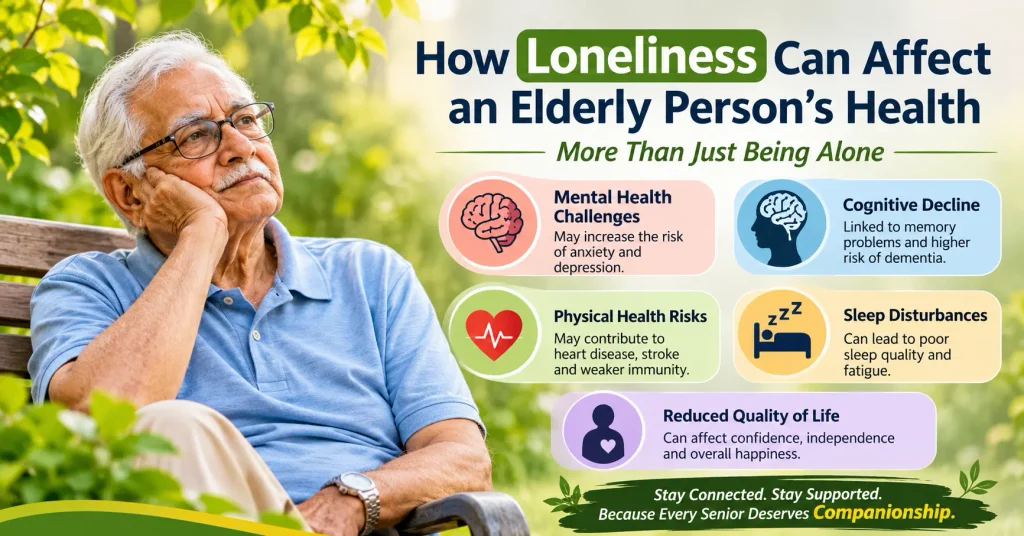
Emotional isolation can influence several aspects of ageing. Research highlighted by the World Health Organization and the US Centers for Disease Control and Prevention associates loneliness and social isolation with poorer mental and physical health.
Potential effects include:
1. Mental Health Challenges: Persistent loneliness can increase vulnerability to anxiety, depressive symptoms and emotional distress.
2. Cognitive Health: Reduced social engagement is associated with cognitive decline and a higher risk of dementia.
3. Physical Inactivity: Seniors who spend most of their time alone may become less physically active, affecting mobility and general fitness.
4. Sleep Disturbances: Emotional distress can contribute to irregular sleeping patterns and poor sleep quality.
5. Reduced Quality of Life: A lack of companionship and meaningful engagement can affect confidence, independence and overall life satisfaction.
According to the National Institute on Aging (NIA), loneliness and social isolation are different experiences. An older person may live alone without feeling lonely, while another individual may experience loneliness despite being surrounded by family members. Therefore, families should pay attention to emotional changes rather than judging well-being only by living arrangements.
7 Practical Ways Families Can Help Older Adults Overcome Loneliness
The good news is that meaningful improvements do not always require expensive arrangements. Consistent attention, companionship and simple daily activities can make a significant difference.
1. Make Communication a Daily Priority
Regular conversations can help seniors feel valued. Instead of limiting calls to asking whether they have eaten or taken their medicines, discuss their interests, memories, experiences and everyday concerns.
Even a 15–20-minute meaningful conversation can help maintain emotional connections.
2. Encourage Group Activities and Social Interaction
Encourage elderly parents to participate in community gatherings, hobby groups, celebrations and recreational activities.
Group participation creates opportunities to build friendships and develop a sense of belonging.
3. Introduce Yoga and Light Physical Activities
Gentle yoga, breathing exercises and age-appropriate movement can support physical activity and emotional well-being.
Activities should be selected according to individual mobility and medical conditions, preferably with professional guidance.
4. Arrange Professional Companionship
When family members have demanding work schedules, a trained Home care attendant can provide everyday assistance and companionship.
A reliable caregiver can help seniors with daily routines, mobility and meaningful engagement while offering families additional support.
5. Consider Nursing Care at Home
Some elderly individuals require assistance beyond companionship. Those recovering from illness, surgery or managing ongoing health needs may benefit from Nursing care at home.
Professional nursing support can help with prescribed care routines, health monitoring and personal assistance. It also helps families manage caregiving responsibilities more effectively.
6. Include Physiotherapy and Movement Support
Limited mobility can increase dependence and reduce opportunities for social interaction.
Physiotherapy at home can support rehabilitation, movement and functional independence when recommended by a qualified physiotherapist. Improved mobility may make it easier for seniors to participate in everyday activities.
7. Explore a Supportive Elder Care Environment
When an elderly person spends most of the day alone, families may consider structured Elderly home care services or a residential care environment.
A suitable setting can provide opportunities for social interaction, shared activities, companionship and access to appropriate care.
Why Ashirwad Elders Home Can Be a Thoughtful Choice for Senior Care
Choosing elderly care is not just about finding a place that provides accommodation and assistance. Families should look for an environment where older adults feel respected, included and emotionally supported.
At Ashirwad Elders Home, the focus is on creating a supportive environment that recognises the importance of companionship alongside everyday care.
What makes the approach meaningful?
- Fun and recreational activities: Opportunities to participate in enjoyable activities, interact with others and maintain an active routine.
- Yoga and wellness activities: Age-appropriate yoga and gentle activities that encourage movement and relaxation.
- Companionship: Opportunities to build friendships, share experiences and reduce feelings of isolation.
- Supportive care environment: Attention to seniors’ everyday needs, comfort and dignity.
- Family involvement: Encouraging families to remain emotionally connected and participate in their loved ones’ lives.
Unlike an arrangement focused only on basic physical assistance, a thoughtful elder care environment also recognises emotional connection, recreation and social participation as important parts of ageing.
Families exploring an old age home in Noida can consider Ashirwad as an option for a more socially engaging and supportive lifestyle.
For families seeking personalised assistance, exploring professional elder care services in Noida can also help identify an appropriate level of support.
Short Questions and Answers
1. Is loneliness common among older adults?
Yes. Loneliness affects older people across different living arrangements and can increase following major life changes or reduced social interaction.
2. Can loneliness affect physical health?
Yes. Research associates prolonged loneliness and social isolation with several adverse physical and mental health outcomes.
3. How can families reduce loneliness in elderly parents?
Regular conversations, family visits, shared activities, social participation and appropriate caregiving support can help.
4. Can yoga and recreational activities help seniors?
Yes. Suitable yoga, group activities and hobbies can encourage movement, social interaction and emotional engagement.
Your loved ones deserve more than just care; they deserve companionship, emotional support and a fulfilling lifestyle at every stage of ageing. At Ashirwad Elders Home, we believe in making every day more meaningful through compassionate care, engaging activities and a supportive environment. Let us help your parents experience their golden years with comfort, dignity and happiness. Connect with Ashirwad Elders Home today to explore thoughtful elderly care solutions in Noida.
Conclusion
Loneliness in older adults should never be dismissed as a normal part of ageing. Every senior deserves meaningful relationships, emotional security, respect and opportunities to enjoy everyday life.
Families can make a positive difference through regular communication, social activities and appropriate professional support. When daily responsibilities make continuous caregiving difficult, choosing suitable elderly care services can provide additional assistance.
At Ashirwad Elders Home, the emphasis on companionship, fun activities, yoga and supportive care reflects an important principle: ageing should not mean giving up connection, happiness or a sense of belonging.