
Key Takeaways
- A familiar home can still hide serious risks, so review it room by room.
- Bathrooms, stairs and poor lighting cause many of the most serious falls.
- Grab bars, non-slip flooring and good lighting are low-cost, high-impact improvements.
- Medication management and regular health checks prevent avoidable problems.
- Emotional wellbeing and social connection are part of safety, not an extra.
- When home support is no longer enough, professional residential care can be the safest choice.
How to Create a Safe and Healthy Home Environment for Seniors
Most families assume a home is safe simply because it is familiar. The rooms feel known, the furniture has stood in the same place for years, and the daily routine rarely changes. Yet many serious injuries among older adults happen inside the home, on ordinary floors, in bathrooms and on staircases everyone has used a thousand times. Something quiet changes as people age. Eyesight dims, balance weakens and medicines pile up, and the house that once felt perfect slowly becomes a place of hidden risk.
This guide explains how to turn an ordinary home into a safe and healthy environment for seniors. It also explains when a home, however well prepared, may no longer be the right answer, and what families across Noida can consider instead, including retirement homes in Noida and other elderly care services. The small changes described here often make the biggest difference, so read each section with your own parents or grandparents in mind.
Q: What is the most important first step in making a home safe for seniors?
A: Walk through the home and identify hazards from the senior’s point of view, starting with the bathroom and stairs.
Why Familiar Homes Become Unsafe
Ageing changes the body in ways that are easy to overlook. Muscles lose strength, reactions slow, and conditions such as arthritis or diabetes can cause numbness in the feet. Weaker eyesight makes it harder to spot a step or a wet tile. Even a small drop in blood pressure when standing up can cause dizziness. None of these changes feels dramatic from one day to the next, which is exactly why families miss them.
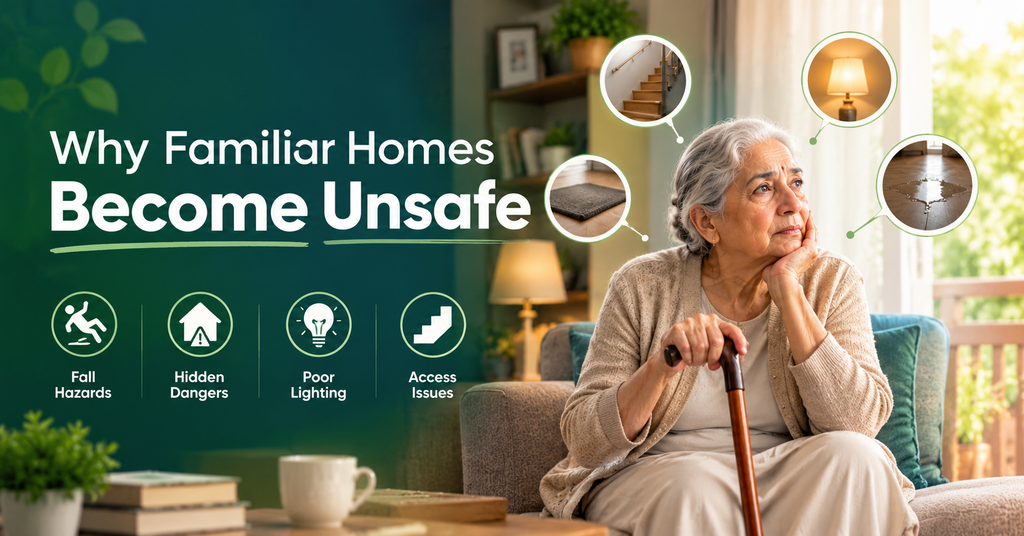
Falls are the most common concern. For many older adults, a single fall leads to a fracture, a longer hospital stay and a loss of confidence that reduces movement. That cycle is one of the biggest threats to independent living, and a home adjusted early can break it. Many families also explore senior citizen care in a professional setting when home adjustments alone are no longer enough.
Start With a Room-by-Room Safety Walk
The most practical first step is a walk through the house with fresh eyes. Imagine you are visiting for the first time, or try to see the home as someone who cannot see well at night would. Note anything that could cause a trip, slip or fall.
Begin at the entrance. Check that the doorstep is level, the path is well lit and a handrail is in place where it is needed. In the living room, look for loose rugs, electric cables crossing the floor and sofas too low to rise from easily. Bedrooms need a clear route to the bathroom, a bedside light that can be reached from the bed and a phone within arm’s reach.
The bathroom deserves the most attention. Wet tiles are slippery, and bathrooms are where many serious falls happen. Install grab bars beside the toilet and inside the shower, use non-slip mats inside and outside the bath, and consider a shower chair for anyone who feels unsteady.
The kitchen needs a similar review. Store frequently used items between shoulder and knee height so nothing has to be reached from a stool. Keep a fire extinguisher and smoke alarm nearby, and make sure gas appliances are switched off after use.
Q: When should a family consider moving a senior into an old age home?
A: When the senior needs constant supervision, medical support or daily help that the family cannot provide safely.
Lighting: The Overlooked Safety Tool
Good lighting is one of the cheapest and most effective improvements you can make. Older eyes need more light to see the same detail and recover more slowly from glare. Aim for bright, even lighting throughout the home rather than a single harsh ceiling light.
Place night lights in the bedroom, bathroom and corridor, so a senior does not need to search for a switch in the dark. Motion-sensor lights along the route to the toilet are especially helpful for people who wake several times a night. Switches should be easy to find, and contrasting colours on switches and door frames make edges easier to see.
Avoid lighting that creates shadows or glare on the floor, since these can be mistaken for steps or holes.(WHO)
Floors, Stairs and Everyday Movement
Flooring is central to safety. Choose surfaces with a non-slip finish and avoid high-gloss tiles in areas that get wet. Carpets should be firmly fixed and free of curled edges. Thresholds between rooms can catch a walking frame or a slipper, so a gentle ramp or flush transition works better.
Stairs need particular care. Both sides should have sturdy handrails running the full length of the staircase. Mark the edge of each step with contrasting tape so depth is easier to judge. If the home has several floors, ask whether the senior can comfortably use them every day. For many families, moving the main living and sleeping areas to a single level is the wisest long-term decision.
Encourage gentle, regular movement. A short walk each morning and simple chair exercises help maintain balance and muscle strength. Physiotherapy advice is valuable here, because a trained professional can recommend exercises suited to the individual’s condition. Many elderly care services now build physiotherapy into the daily plan.
Medication and Daily Health Checks
Many seniors take several medicines each day, and mistakes are easy to make. A missed dose can cause problems, and a double dose can be dangerous. Create a simple system, such as a weekly pill organiser filled by a family member or caregiver. Keep a written list of every medicine, including doses and timings, somewhere visible.
Regular health checks are equally important. Blood pressure, blood sugar, weight and oxygen levels can reveal problems before symptoms become serious. Patterns often matter more than single readings, so share the notes with the doctor at every appointment.
Hydration and nutrition need attention too. Older adults often feel less thirst and may drink too little. Meals should include vegetables, fruit, pulses, dairy or other protein sources and whole grains. Small, frequent meals suit people with a poor appetite, and a water jug kept within easy reach is a simple habit that helps.
Emergency Preparedness
A safe home is also a prepared home. Keep emergency numbers in large print beside every telephone, including the family doctor, a trusted neighbour and the nearest hospital. For seniors who live alone, a medical alert device allows them to call for help even when they cannot reach a phone.
Make sure someone checks on the senior every day, in person or by phone. An agreed routine, such as a morning call at a set time, means a problem is noticed quickly if the call is missed. Families living abroad can use video calls and shared health logs to stay informed without relying on memory. Families who need 24-hour elderly care for a parent can also ask homes how night-time monitoring works.
Plan for power cuts and extreme weather. Keep a torch with fresh batteries, a stock of drinking water and a few days of essential medicines. During Noida’s hot summers, check that fans or air conditioners work properly and that the senior is never left in a room that becomes dangerously warm.
Emotional Wellbeing Is Part of Safety
A safe home is not only about physical hazards. Loneliness, boredom and low mood affect health as much as a loose rug. Seniors who feel isolated may eat less, sleep poorly and become less active, which raises the risk of falls and illness.
Encourage visits from grandchildren, friends and neighbours. Keep familiar photographs, objects and music around the house, since they reinforce a sense of identity. Simple activities such as puzzles, reading, gardening or prayer give each day a sense of purpose.
Watch for signs of depression or confusion. Changes in sleep, appetite, memory or interest in daily life deserve a conversation with a doctor, and families can also raise them with a senior citizen care provider.
Q: Can NRI families stay involved if a parent lives in a care home?
A: Yes. When comparing the best old age home in Noida options, look for regular updates, video calls and clear communication with family members.
ALSO READ- How to Choose the Best Elder Care Home in Noida
The Gap Most Families Are Never Told About
Most advice about senior safety focuses on the house alone. Yet many families face a harder question: what happens when the home itself can no longer meet a senior’s needs, even after every adjustment? A house designed for a family of five may be impossible to manage for someone who needs attention around the clock. Caregivers may be hard to find, and siblings may live in different cities or countries.

Families often delay this decision because they feel guilty, or because they believe that moving a parent into professional care means giving up on them. In reality, a well-run residential care setting can offer what a busy household cannot: trained staff available at all hours, nutritious meals prepared for specific needs, monitored health checks, social activities and a secure environment. Many families find their parents are more social, better fed and more physically active afterwards. Residential care for seniors is built around these gaps, which is why it deserves a fair look.
For families of NRIs considering an old age home in Noida, the gap is wider. A son or daughter working abroad may want certainty that a parent is safe and cared for, but cannot always be present. Choosing a home with transparent communication, regular updates and video call facilities can give that peace of mind.
Our advice is simple. Involve a geriatric care specialist or the family doctor when weighing the options. Assess the home honestly using the checklist above, and then assess the care needs just as honestly. If the senior needs more support than the family can safely provide, professional residential care may be the kindest choice.
Choosing the Right Support in Noida
Noida now has a growing range of options, from independent homes to assisted living and specialised memory care. Many families start by searching for the best old age home in Noida, yet the right choice depends on the senior’s daily needs. When comparing them, look beyond the brochure. Visit in person if you can, ask how staff are trained and find out how medical emergencies are handled. Ask what the daily routine looks like, what meals are served and how families are kept informed.
Specific needs call for specific services. Seniors with memory problems need a secure environment with dementia-trained staff. Those recovering from surgery may need rehabilitation and close monitoring. Families looking for a settled, comfortable home for a parent may prefer one of the retirement homes in Noida that offer social activities and personal support. Families who need supervision through the night should ask about 24-hour elderly care and whether staff are present after dark.
If you are searching for an old age home in Noida, Ashirwad Elders Home is worth considering for its focus on elderly comfort, daily care, safety and a supportive living environment. When comparing Ashirwad with other old age homes, families should evaluate staff availability, cleanliness, medical assistance, nutritious meals and personal attention. Those looking for a premium old age home in Noida should also ask about room facilities, activities and services included in the monthly fee. For families seeking an affordable old age home in Noida, comparing care quality and overall value can help them make a confident decision. Ashirwad Elders Home aims to help seniors feel cared for, respected and comfortable while giving families greater peace of mind.
A comfortable home for your parents, with meals, activities and 24×7 support.
Find the right room for your family: [Contact Now]

FAQ’S
1. What are the most common hazards that cause falls for seniors at home?
Wet bathroom floors, loose rugs, poor lighting, stairs without handrails and cluttered walkways cause most falls among older adults at home. Bathrooms and staircases carry the highest risk, so start your safety review there.
2. How bright should lighting be for an elderly person’s home?
Older adults need considerably more light than younger people to see the same detail. Use bright, even lighting throughout the home, with night lights in the bedroom, bathroom and corridor and motion-sensor lights on the route to the toilet. Avoid glare and shadows on the floor, which can be mistaken for steps.
3. Where should grab bars be installed for seniors?
Install grab bars beside the toilet, inside the shower and beside the bath. Fix them firmly into wall studs or solid masonry, because a loose bar can cause a fall rather than prevent one.
4. How do I make my home safe for an elderly parent living alone?
Keep emergency numbers in large print beside every phone, add a medical alert device and arrange a daily check-in by phone or in person. Remove loose rugs, fit handrails on both sides of the stairs and keep frequently used items between shoulder and knee height.
5. How can NRI children monitor their elderly parents’ health from abroad?
Agree on a regular video call, share a simple health log that records blood pressure, blood sugar and medicine timings, and ask the care provider for periodic updates. Choose a home or caregiver that communicates clearly with family members, since this matters most when you are far away.
6. When should a senior move from home to an old age home in Noida?
Consider a residential setting when the senior needs supervision around the clock, regular medical monitoring or daily help that the family cannot provide safely. Repeated falls, missed medicines and growing confusion are common signs that home support is no longer enough.
7. What is the difference between an old age home and assisted living?
The terms vary between providers, so there is no single standard. In general, an old age home offers housing, meals and general support, while assisted living adds more help with personal care, medication and health monitoring. Ask each provider exactly which services are included in the monthly fee.
8. How can seniors’ medicines be managed safely at home?
Use a weekly pill organiser, keep a written list of every medicine with its dose and timing, and check it against the doctor’s latest prescription. A family member or trained caregiver should confirm each dose, and any missed dose or side effect should be reported to the doctor promptly.


One Response